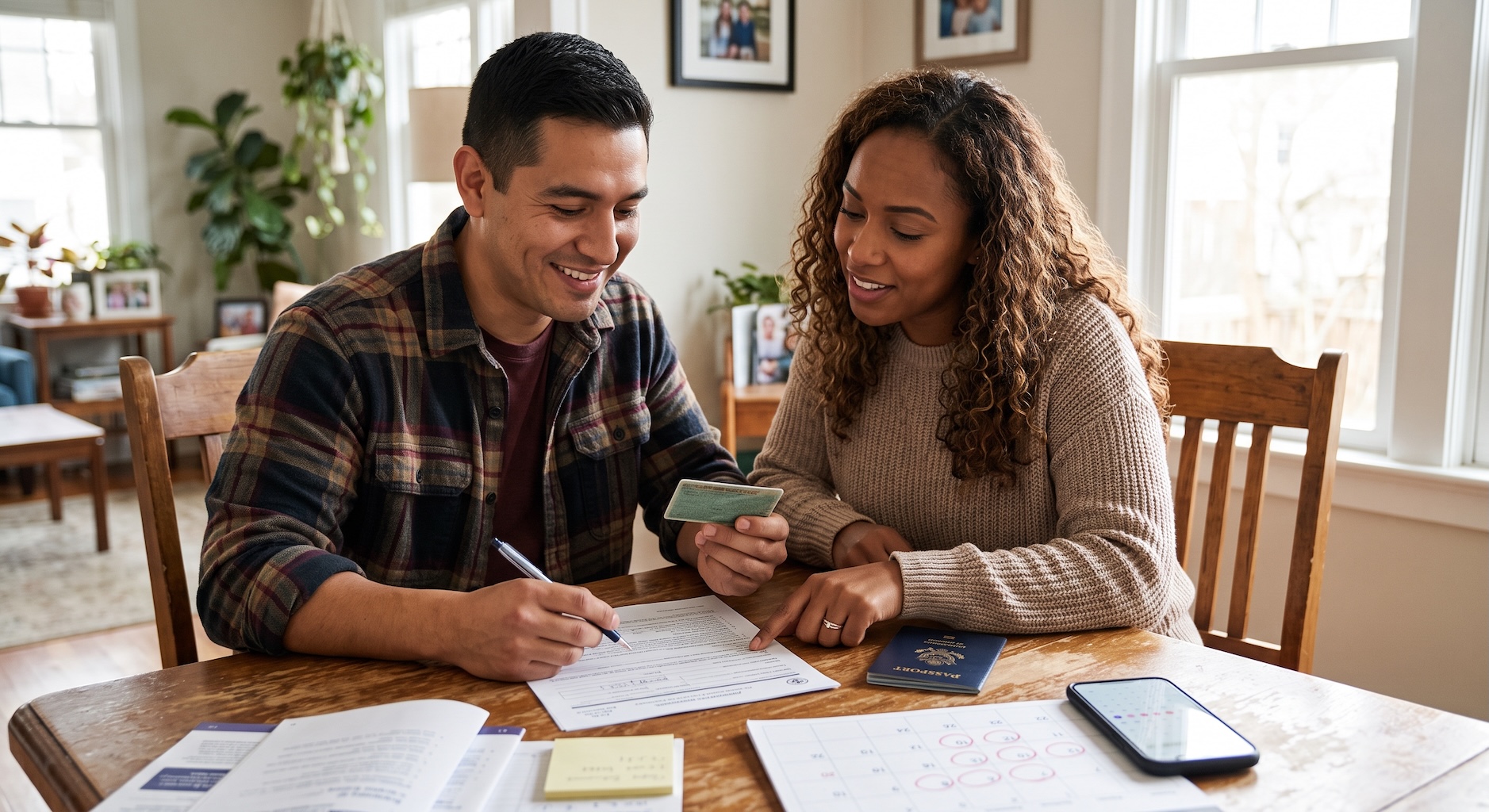
Once you've decided to move forward with a marriage-based green card, the next question is almost always the same: what exactly do we need to gather? It's a reasonable thing to feel overwhelmed by, especially when lists online seem to contradict each other or leave out your specific situation.
Marriage-based cases are part of our family immigration practice, where reuniting and protecting families is the goal. We help couples throughout Orange County prepare these cases, from Fullerton to Garden Grove, and the checklist below is the same starting point we walk clients through in our Irvine office.
To make it easier to prepare with confidence, here's a practical, category-by-category checklist of the documents couples are typically asked to provide.
In general, a marriage-based green card case requires four categories of documents: proof of identity for both spouses, proof that the marriage is legally valid, evidence that the marriage is genuine (often called bona fide marriage evidence), and financial sponsorship documents. The exact list depends on whether you're filing through adjustment of status or consular processing, and on your specific circumstances, so treat this as a starting framework to confirm with an attorney rather than a final checklist.
This category establishes who each spouse is:
USCIS's guidance on green cards for immediate relatives of a U.S. citizen confirms the marriage itself needs to be legally recognized where it took place:
This is often the category couples underestimate. USCIS wants to see that the relationship is genuine, not entered into solely for immigration purposes:
If a couple doesn't live together for a specific reason, being prepared to explain that circumstance, with supporting evidence, matters more than checking every box on a generic list.
The U.S. citizen or lawful permanent resident spouse generally needs to show they can financially support the foreign spouse. This step begins with Form I-130, the petition that starts the family-based green card process, alongside:
Everything above applies whether you're filing in the U.S. or abroad, but consular processing adds a few of its own requirements. You'll generally need the DS-260 immigrant visa application, a completed medical exam from a Department of State-approved panel physician (rather than a USCIS-approved civil surgeon), and police certificates from any country where you've lived for an extended period since turning 16. These documents follow a different sequence than adjustment of status, so it's worth confirming which track you're on before you start assembling your file.
A few avoidable errors show up again and again in marriage green card cases: submitting a foreign-language document without a certified English translation, using an expired form edition, or having a name on one document that doesn't match another due to a legal name change that was never documented.
None of these reflect on whether a marriage is genuine, but each one can trigger a Request for Evidence and add months to an otherwise straightforward case. Reviewing your full document set for consistency before filing is one of the simplest ways to keep your case moving.
Prior marriages don't disqualify anyone from a marriage-based green card, but they do add a documentation step. Along with your termination records, USCIS may also want to see evidence that the earlier marriage wasn't itself entered into for immigration purposes, particularly if the timeline between marriages is short. If this applies to you, flagging it for your attorney early, rather than after a Request for Evidence arrives, keeps it from becoming a bigger issue than it needs to be.
By the time couples reach the green card interview, USCIS typically expects both originals and copies of everything previously submitted, along with any documents that have been updated since filing, such as new lease agreements, updated tax returns, or, if applicable, records of children born during the marriage.
Because a marriage green card case can involve dozens of individual documents across several categories, the couples who move through the process most smoothly tend to be the ones who organize everything early, rather than scrambling before a filing deadline or interview notice. Small gaps or inconsistencies are one of the most common, and most avoidable, sources of delay.
This article is general information, not legal advice. Immigration law changes often and every case is different, so please consult an immigration attorney about your situation.
Gathering the right paperwork is one of the most concrete things you can do to move your marriage green card case forward with confidence. If you'd like a second set of eyes on what you've collected so far, whether you're in Irvine, Garden Grove, or anywhere else in Orange County, we're here to help.

Embrace your Future with Brudner Law